How to Home Compost Sugarcane Packaging in New Zealand
Turn your takeaway packaging into garden gold
Sustainable packaging only delivers its full value when it’s disposed of correctly. One of the biggest questions we hear from foodservice operators, distributors, and small business owners is:
“What actually happens to compostable packaging once it leaves my counter?”
This article expands on our Green Choice™ sugarcane composting flyer and infographic, answering common customer concerns with clear, practical guidance you can confidently share with your team or customers. It’s designed to help cafés, restaurants, distributors, and eco-conscious buyers close the loop on compostable food packaging—without adding complexity or risk.

What is sugarcane packaging?
Sugarcane packaging is made from bagasse, the fibrous by-product left after sugarcane juice is extracted. Instead of being burned or wasted, this material is moulded into durable food packaging such as:
- Takeaway food boxes
- Clamshell containers
- Bowls and plates
- Portion cups and cutlery
Green Choice™ sugarcane products are plant-based, plastic-free, and—where certified—home compostable under New Zealand conditions.
Is sugarcane packaging really home compostable?
Yes—when certified and disposed of correctly.
Many Green Choice™ sugarcane products meet AS 5810 standards for home compostability. This means they are designed to break down in a typical backyard compost system without leaving harmful residues.
However, composting success depends on how the product is handled after use.
This is where clear guidance matters—especially for foodservice operators who want to avoid greenwashing concerns or customer confusion.

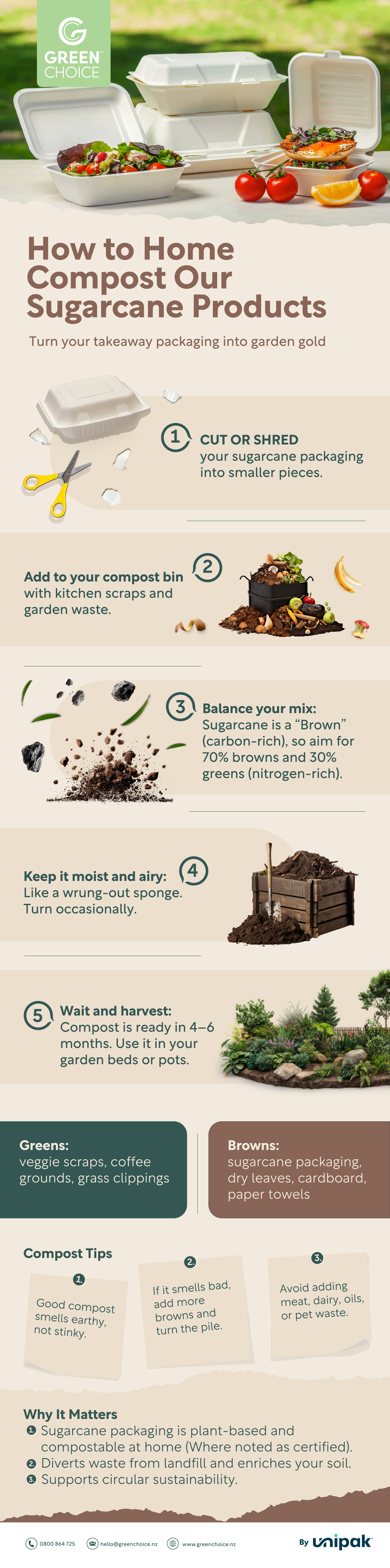
How to home compost sugarcane packaging (step-by-step)
1. Cut or shred your packaging
Large pieces break down slowly. Use scissors or tear sugarcane packaging into smaller sections before composting.
Tip for cafés: Flattening and tearing boxes before disposal helps compost bins work faster and smell better.
2. Add to your compost bin
Place sugarcane packaging into your compost alongside:
Greens (nitrogen-rich):
- Vegetable scraps
- Coffee grounds
- Grass clippings
Browns (carbon-rich):
- Sugarcane packaging
- Dry leaves
- Cardboard and paper towels
Sugarcane counts as a brown.
3. Balance your mix
Aim for roughly:
- 70% browns (carbon)
- 30% greens (nitrogen)
This balance helps microorganisms break materials down efficiently while avoiding odours.
4. Keep it moist and airy
Your compost should feel like a wrung-out sponge—damp, not wet.
- Turn the compost occasionally
- Avoid compacting heavy food waste in one spot
If it smells bad, add more browns and turn the pile.

5. Wait and harvest
Under normal conditions, compost is ready in 4–6 months.
Finished compost should look dark and crumbly, with no visible packaging pieces remaining. Use it in:
- Garden beds
- Planters
- Pots and landscaping
What not to compost
To keep your compost healthy:
- ❌ Meat or dairy
- ❌ Oils and sauces in excess
- ❌ Pet waste
- ❌ Non-certified home compostable packaging
- ❌ Industrially certified compostable packaging (must be composted in industrially controlled conditions)
If your sugarcane packaging includes plastic-lined lids or non-compostable components, remove these before composting.
Why this matters for your business
1. Reduces landfill waste
Correct composting diverts organic material from landfill, where it would otherwise generate methane.
2. Supports circular sustainability
Sugarcane packaging returns nutrients to the soil, completing a natural material loop.
3. Builds customer trust
Clear disposal guidance helps operators avoid confusion and strengthens credibility around sustainability claims—an increasing concern among both consumers and procurement teams.
4. Makes sustainability easier to sell
Distributors and sales reps benefit from simple, shareable education tools they can pass directly to customers without extra explanation.
Common customer questions
Can sugarcane packaging go in council green bins?
This depends on your local council. Some accept certified compostables; others do not. Always check local guidelines.
Does food residue stop composting?
No. Small amounts of food residue are normal and acceptable in compost systems.
Will sugarcane packaging break down in worm farms?
In small, shredded quantities—yes. Introduce gradually and monitor moisture levels.
Is compostable packaging the same as biodegradable?
No. Compostable products meet specific standards for breakdown time and residue, while biodegradable is a broader, less regulated term.


How Unipak™ helps you close the loop
At Unipak™, we don’t just supply packaging—we help make sustainability practical, defensible, and easy to communicate.
Whether you’re:
- A distributor needing clear talking points
- A foodservice operator wanting to educate customers
- A small business owner looking for trustworthy compostable options
Our team can help you select certified products and provide disposal guidance that actually works in the real world.
Talk to the Unipak™ team today to explore Green Choice™ sugarcane packaging and practical sustainability support.
For the latest details on all our standards and certifications, please consult the relevant Product Specification Sheets, and our Materials & Disposal Guidelines.